The album is in four sections
Requiem for the Sixth Extinction
Part 1 End/ Beginning
1. End /Beginning
2. When we are all gone
3. The Sixth Mass Extinction
4. Our house is on fire
5. Do or do not
6. Nature my son
Part 2 Nature
7. We can’t cancel Spring
8. Pipistrelle
9. Robin
10. Tribute to the humble plankton
11. Word painters
12. Swift
Part 3 Confutatis
13. Confutatis
14. Fake news
15. Holding back the river
16. Money
17. Playground politics
18. One Pebble
Part 4 Kiribati
19. Kiribati
20. Colony on Mars
21. Banaba
22. Kiritimati /Close your eyes
23. There is still time
24. Farewell humanity, you won’t be missed
Part 1-End /Beginning
Here are some notes. When I listen to music I want to read more about the context of the album. If you are the same, I hope you find this helpful.
End/ beginning
This song has three parts: the first is a recording of a Kiribati choir- the second is a piano progression based on the Kiribati choir song on Nature My Son, which is a motif that reappears from time to time- the third is the riff for Nature My Son with the first poem, spoken by John.
When we are all gone
Maura sings and Jo speaks. I often felt confused through the writing process about the possible futility of worrying when it may already be too late. Was it was pointless anyway, given humanity’s apparent parasitic nature? Then a hope that we might as a species have enough common sense and common cause, even at this late stage, to take the joint action required to avoid the tipping points in climate change beyond which there is likely to be no recovery. Then lots of existential questions arose, like whether we overrate ourselves as a species and whether the planet would be better off without us anyway. See the last track!
Requiem for the Sixth Extinction
This borrows a little from Be Still by Los Lobos, which has a 6/8 over a 3/4 rhythm. My dad, Eddie, reads a poem of dedication to the people of Kiribati. I have always loved songs that follow a simple pattern yet develop this and extend it. I love Ara Batur by Sigur Ros, for example. The first Mozart Requiem musical reference is in here. There are, in fact, lots of snippets from The Requiem, which became a fascination during Spring 2020.
Our house is on fire
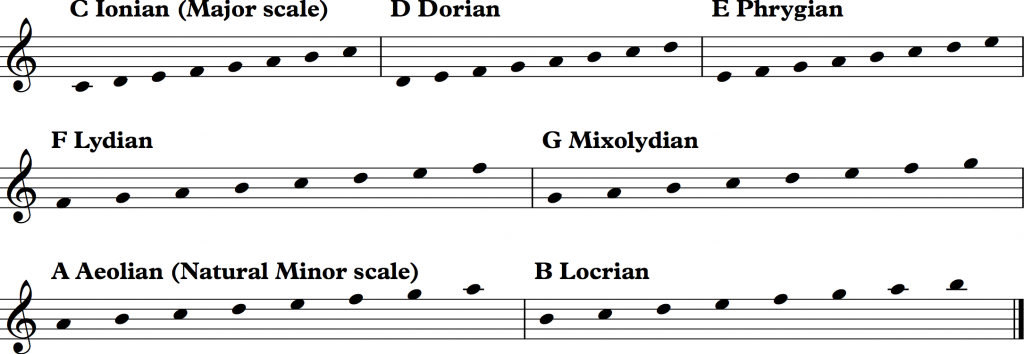
This music backs the speech made by Greta Thunberg to the Davos meeting in 2018. It’s an inspiring speech. I hope the music matches the urgency of her message. The music attempts to be in the Lochrian mode. Modes became a bit of an fascination over the recording of the album. I’ll explain them elsewhere on the website, for those who are interested. David Bennett does a much better job of this though , as well as being a fantastic explainer of many aspects of music-(do look him up).
Do or do not
John speaks. Why do bullies feel the need to pick on Greta? They truly are small men. And she is not the point.
Nature my son
This is an old folk song rewritten for the album. It’s in the Child Ballads. I think the original ballad was called Jackie my Son. I loved, in my twenties, the guitar music of African groups such as The Four Brothers and The Bhundu Boys from Zimbabawe. I still do, and return to them regularly for unqualified joy. I owe a large debt to John Peel and Andy Kershaw for my music education. I learned so much music from around the world from their shows. Ritchie plays drums, Darcie plays the trumpets and Helen plays the sax. They are joined by a recording of a Kiribati choir on the links (the wonders of technology). The piano loop was worked out by Maya by randomly linking the letters of the word Kiribati to musical notes.
Part 2-Nature
We can’t cancel spring
Written during Spring 2020 and partly inspired by Mercury Rev’s The Dark Is Rising. My wife, Jo, loves David Hockney and tells me he did a series of works called Spring Cannot Be Cancelled. Outside our house is a rookery of about 200 birds. They are incredible- they never shut up, but they have obviously got their act together. This is partly in Aeolian mode, I think.
Pipistrelle
A tribute to my friend who has dedicated his life to studying and preserving nature. It’s the same sequence as Our House is on Fire. I have had some memorable experiences these last two years accompanying him on bat surveys at Liverpool Anglican Cathedral.
Robin
Also written during Spring 2020 when I sat and watched the birds for long periods. I wanted to borrow the suspended feel of Daori Farrell’s version of Bogie’s Bonny Belle. We have bird feeders hanging from a tree outside our kitchen window. It’s a world within a world.
Plankton
An amazing fact shared by John. I still find it hard to believe. Nature seems to have so many amazing facts. For example, carbon dioxide, the main contributor to climate change, constitutes less than 0.5% of the atmosphere. Yet the “minor” change in its levels is the issue, to a great extent.
Word painters
The Spell Song Project was an inspiration for this and the next song. It was a reply to many words from nature being removed from the Oxford Junior Dictionary in the 2000s in response to the lack of knowledge of nature and therefore lack of nature language used by children. It seems that we make sense of the world through words, yet they are a code to approximate something that is real, and therefore only an approximation of reality. Meaning is only truly given to the word by experiencing it through our senses.
Swift
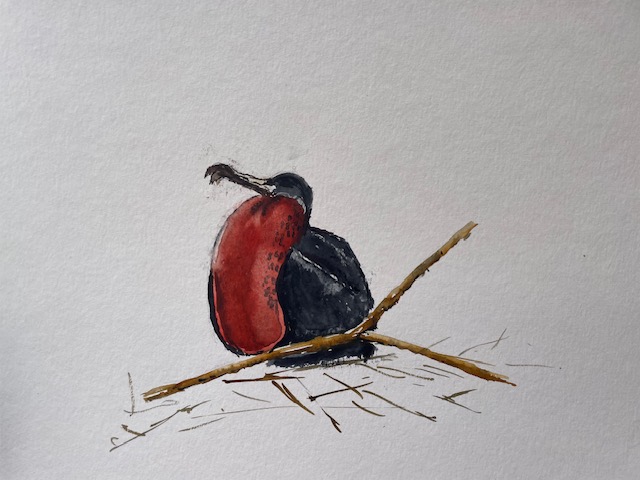
Caistor has a thriving swift population in the summer, thanks to a group of people who work hard to make the houses swift friendly. An exciting part of spring is watching the skies and waiting for the return of the swifts. The trumpet part is taken from part from Mozart’s Requiem.
Part 3-Confutatis
Confutatis
The words are taken from Mozart’s Requiem. I remember seeing the film, Amadeus and being moved by the scene where Mozart describes Confutatis to Salieri. Not a true story, but I found it impressive never the less.
Fake news
Maura tells the story of the tree sparrows. I chose this story as I could not bear to refer to the man who at the moment is the main obstacle to climate change mitigation. So I picked an old story from a different country about the danger of ignoring scientists. It is not an observation about China specifically, but of our tendency to think we know more when we are in power. It happens everywhere, more and more. These two next songs are about the same theme, our seeming certainty that we can control nature. I borrowed this riff from one of my childhood bands! There’s also a bit of the Requiem in this too…. and a little bit of Phrygian mode too, I think.
Holding back the river
The words are spoken by Jo. Another of my interests is the 11th century polymath, Hildegard of Bingen. Through her I formalised my feelings about so called holy people, philosophers, thinkers, kings and rich and powerful people who can buy the luxury of thinking about God, theologising, building monuments to theology ( I was thinking about Lincolnshire Cathedral at the time I wrote it) and philosophy, planning space travel to escape the planet, (or just simply buying indulgences) rather than just getting outside the cloisters and helping the poor. A bit of Mixolydian mode in part of this song. You can hear this mode in lots of old folk tunes.
Playground politics
It’s in the Lydian mode, fingers crossed. (As you can see I don’t truly understand modes). The tune came from a vague memory of the song that goes “Two and Two are Four- Four and Four are Eight…” I’m not sure what it is. Issac Cordel’s urban sculpture was an inspiration for this song. (At the time of writing, Jan ’26) our politicians have now even seemed to have given up talking as if they care about the state of nature and climate change.
One pebble
The tune came out of relating notes to prime numbers and just connecting the letters of the musical alphabet to the primes. The note order was therefore pure chance. The sentiment came from the feeling of sadness at how the climate strike children seemed to be vilified, rather then celebrated.
Part 4-Kiribati/End/Beginning
Kiribati
Thanks to our pop up choir for coming and singing. I’ve learned a lot about Kiribati this last year. An amazing culture under existential threat. They have purchased land in Fiji for when they have to leave their lands, they have some arrangements in place with Australia and New Zealand, and now they are turning increasingly to China for support. It was a British Colony till 1979.
Colony on Mars
This is the previous president of Kiribati, who has a beautiful voice and a profound message. He sounds so respectful, so practical and so gentle, when he must be in turmoil about his country’s position, which it is blameless in creating.
Banaba
A tale of exploitation by Britain, Australia and New Zealand. This woman tells the story with such dignity. The question and answer structure is a common form in folk music. The song’s soul is in the folk song, My Son Edward.
Kiritimati /Close your eyes
A tale of exploitation by Britain, and an imagined mother’s words of comfort to her child in the face of overwhelming national and physical power. Part of Mozart’s Requiem links the vocal verses. I actually wrote this for our first born child. The sentiment seemed to fit this theme, however. I wonder what the islanders of Kiritimati made of the hydrogen bomb explosions, and whether they feared for their children.
There is still time
Not much, but lots of inspiring things are happening and this album is partly inspired by the members of S.O.S. Biscathorpe in Lincolnshire, near to where I live, who have been fighting for years to stop oil drilling in an AONB in Lincolnshire- truly a David v Goliath story. They have now morphed into FFFL- Fossil Fuel Free Lincolnshire. They never give up.
Farewell humanity, you will not be missed
In spite of my sincere desire to enjoy my life and my hope that my descendants do the same, evidence would suggest that we appear to be parasites that the planet would be better without, and that our time is probably almost up, unless we get our very large skates on.
Extracts used in the making of this recording– thankyou for permissions
Kiribati Independence Celebration -Choir and Dance – Belles travel blogs //Greta Thunberg speech at Davos 2019//Otter Sounds Youtube Kids Videos// Haunting son of Humpbacked Whales Hindustan Times// Bat Calls – Pipistrelle 2nd September 2021 Bill Dennis// A Robin Singing Tels Web// Kingfisher ~ Bird Call ~ bird song ESL and Popular Culture// Common swift (Apus apus) Zuzanna Żak// Water voles squeaking Harvy Cola// Green Woodpecker – Sounds High On Nature// The Territorial Call of the Red Squirrel Hazel Stark// Emergency Bushfire Warning Australia Urban Duniya – Travel with Tim// Snoring Dormouse with sound – listen Snoring Dormouse// Frigate bird voices: magnificent frigate bird Cornell ab of Ornithology// President of Kiribati speaks on Climate Change Migration at the #IOMCouncil2015// MTG – Project Banaba by Katerina Teaiwa MTG Hawke’s Bay// Pacific preparations on Christmas Island // Singing NIGHTINGALE – the best BIRD SONG Wildlife World.
W A Mozart
Requiem in D minor
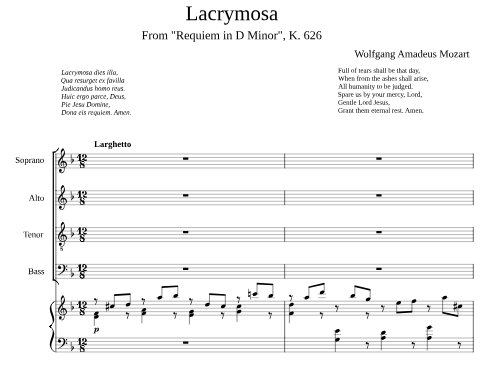
When we were putting the songs together, we decided we liked the title, “Requiem for the Sixth Extinction,” because I had been listening to Mozart’s Requiem a lot. So there are quite a few snippets of melodies from that piece in the songs. See a clip from the film “Amadeus” below.
Intro to Lachrymosa
.
Modes- a brief explanation
Nowadays we tend to use just major and minor scale. they are actually examples of modes too. Modes are different from each other because the distance from one note to another changes according to the mode, causing a different effect or feel. To understand, play the 7 main modes just on the white notes, starting at a different note each time, and play up to the next octave note. If you want to know more, look up David Bennett. See below. Bernstein also did a fantastic lecture for children back in the 60s. See below.
The most common modes
.